



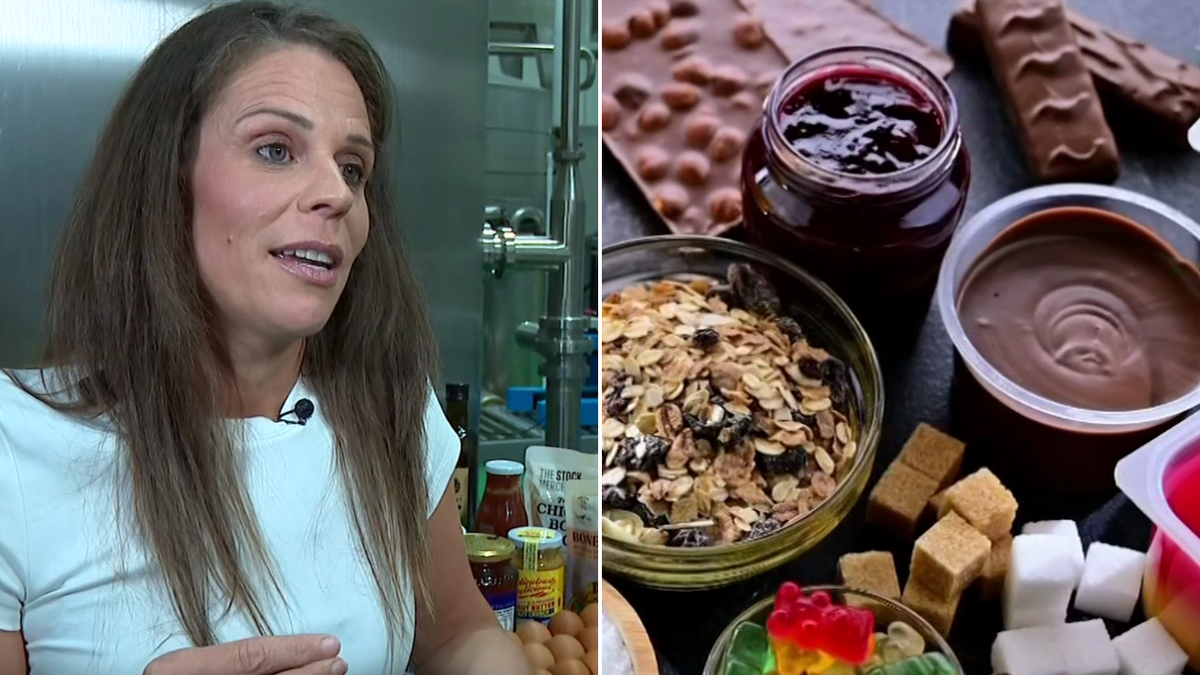

An investigation into ultra-processed foods has revealed the devastating effects on not just our bodies but our brains, with a research team from the United States left stunned by their findings as local farmers rally for change.
Salt, fat, sugar, preservatives, additives, flavours: the list goes on and on. These snacks are designed to deliver a flavour hit which quickly disappears and keeps you reaching for more.
WATCH THE VIDEO ABOVE: Ultra-processed foods rewire the brain
Know the news with the 7NEWS app: Download today
“What you eat does change your brain,” Associate Professor Alex Di Feliceantonio, a Virginia Tech neuroscientist, said.
Scientists used brain scans to measure the responses of 60 study participants to healthy meals versus ultra-processed meals, even when both had the same sugar and fat content.
“Really from the beginning as the data started coming in, it was different on almost every measure,” Di Feliceantonio said.
The highly processed meals triggered a different metabolic response and activated a region of the brain associated with motivation and reward. The unhealthy meals spiked insulin levels and elevated blood sugars for much longer.
“Our population is getting sicker and sicker and sicker,” farmer Sallie Jones said.
“I have a child that’s sugar-addicted and I know how much it affects his behaviour and his emotions.”
Jones, who runs Gippsland Jersey, is one of the increasingly popular Australian food brands on a mission to take us back to basics, farming fresh local milk and selling it direct to the public without any junk. Their small store also stocks a selection of healthy, unprocessed food.
“If you change your diet, you can change your brain,” Di Feliceantonio said.
CSIRO modelling predicts our diets will become even worse by 2030, with Australians eating 10 per cent less fruit and even more junk food. But the move towards whole foods, while small, is growing.
“So in the US, we get about 55 per cent of our calories from ultra-processed foods. In Australia, it’s about 42 per cent. Y’all are fourth leading in calories consumed from ultra-processed foods,” Feliceantonio said.
More research and education is the key.
“As the years go on, the consumer is getting smarter, so I can’t see us going backwards,” Jones said.
“Once you know, you know, and you can’t unlearn what you know.”


