




Furmint vines at the Disznókő vineyard in Hungary’s Tokaj region.
Dizsnoko
Mention European wine, and you’ll likely picture the grand châteaux of Bordeaux or the rolling hills of Chianti as the ultimate destinations for vineyard tours. But travel further east, and you’ll reach Hungary’s Tokaj area, which — like Chianti — is one of the world’s oldest officially demarcated wine-growing regions.
Global wine exports were down 4.7% in volume between 2024 and 2025, according to the International Organisation of Vine and Wine (OIV), but Tokaj appears to be bucking the trend in something of a “quiet wine” boom. The region’s production rose 8% to 10% over the same period, according to tourism board Visit Tokaj.
‘The wine of kings’
Tokaj — less than three hours by train from Hungary’s capital, Budapest — was classified as a wine region nearly 300 years ago, with winemaking going back nearly 1,000 years.
Indeed, King Louis XIV of France declared the region’s sweet Tokaji Aszú wine as: “The wine of kings and the king of wines,” after receiving a shipment to the Palace of Versailles as a diplomatic gift from a Hungarian prince in the 1700s.
Centuries later, it remains the Tokaj region’s signature wine, produced from furmint white grapes that thrive in the area and are naturally affected by Botrytis cinerea — or noble rot — in a process that concentrates the fruit’s sugars, according to Visit Tokaj’s Dale Takio.
“Ancient volcanic soils, the influence of the Bodrog and Tisza rivers, and the region’s cool autumn morning mists followed by warm afternoon sunshine create ideal conditions for noble rot,” Takio said.
Alongside their sweetness, Tokaji Aszú wines have a high acidity and a low pH, meaning they are less likely to ferment in the bottle.
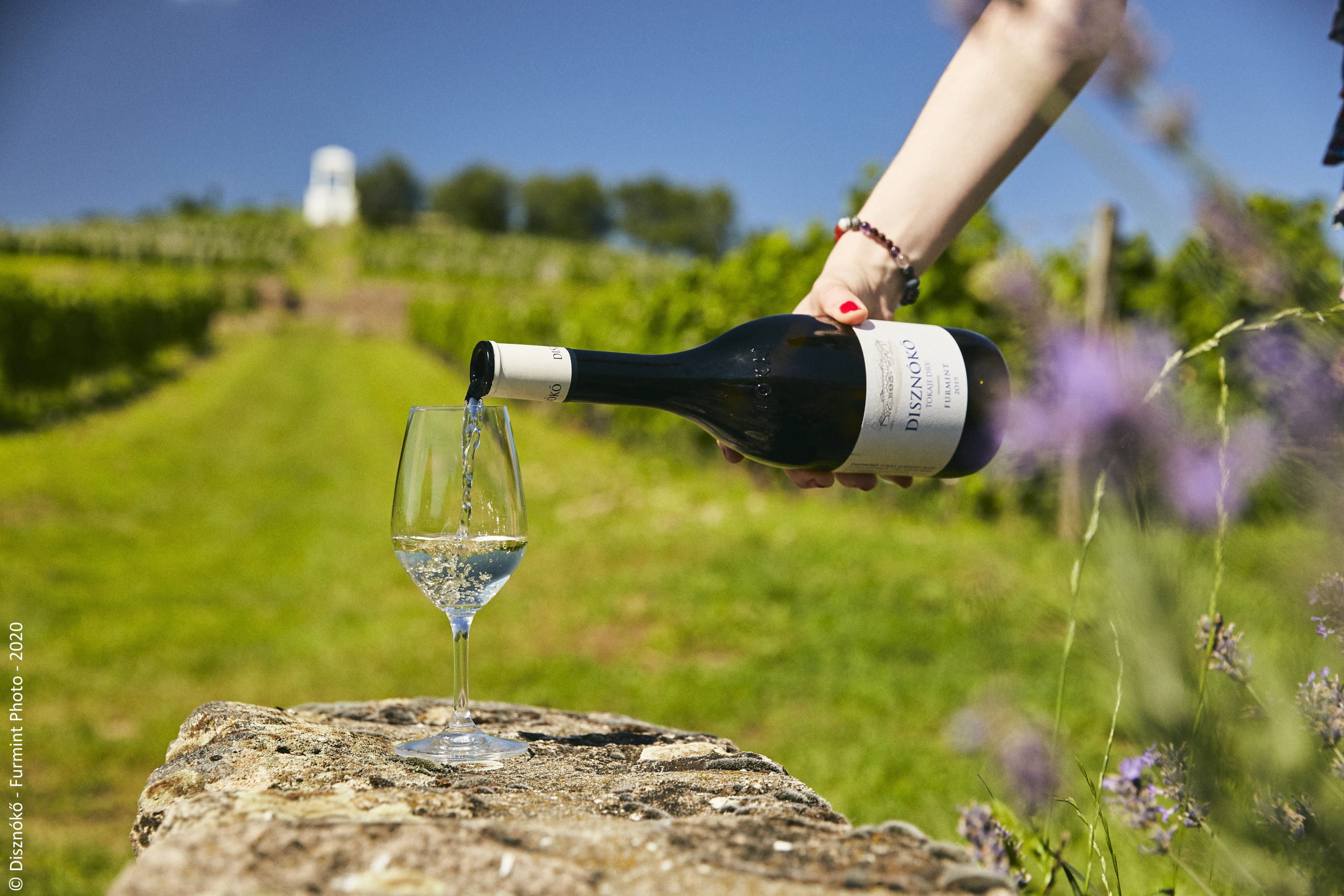
As well as producing Hungary’s famous sweet Tokaji Aszú, the Disznókő vineyard makes dry wine from furmint grapes.
Disznókő
Back in the 1700s, those characteristics made the wine easy to transport to the royal courts of Europe, said Gergely Makai, technical director and general manager at Tokaj-Hétszőlő Organic Vineyards. “You always have a perfect balance for the wines, and because of this high acidity, you have a very long aging potential.”
Wine challenges
Takio said some people are not aware of the region’s other wines, adding that there is “so much more” than Tokaj Aszú.
At the Disznókő estate, a bottle of Tokaji Aszú retails for about 30 to 40 euros ($35 to $47), and while it is the vineyard’s “most important” wine, according to head winemaker and general manager Laszlo Meszaros, there is a focus on drier styles of wine from furmint grapes. “It has this fresh mineral expression that is very fashionable today,” Meszaros said.
Meanwhile, Hétszőlő’s Makai said that although the vineyard is “very proud” of its traditional wines, diversifying is important. “We see also that we are facing challenges due to lower wine consumption globally, and now we have to concentrate on high quality, on authenticity,” he said.
Learning the story of the region’s wine has become increasingly important to travelers. “They want to have the experience, they want to have the feeling, they want to have the story,” Makai said. Hétszőlő offers tastings at its 500-year-old Rákóczi Cellar in the town of Tokaj.
The Rákóczi Cellar is named after the family that ruled the Hungarian town of Tokaj in the 17th century. Today it is used for wine tastings and events.
Rakoczi Cellar
Takio said people don’t always realize that Tokaj is about more than just wine. The region is a UNESCO World Heritage landscape — protected not just for the wine itself, but for the entire cultural landscape, including the ancient network of cellars, historic villages, and deep-rooted agricultural traditions. “Wine may bring people here, but it’s everything else that keeps them coming back,” he said.
Like other wine regions, Tokaj is dealing with the impact of climate change. Severe drought and hot temperatures across Hungary this summer meant that Hétszőlő’s harvest for its dry wine began earlier than usual — in the middle of August. “The final quality of the vintage will ultimately depend on conditions during the remainder of the harvest,” said Takio.
Hungary’s export market
Europe is the main market for Tokaj’s wine, with the Czech Republic, Slovakia and Poland its biggest export destinations by volume, according to tourism board figures. In terms of cost, France, Spain and the U.S. pay the highest premium per liter.
North America is among the most coveted yet untapped opportunities for Hungarian wines, which compete with better-known wine regions, established distribution channels and substantial marketing budgets, Takio said.
It’s something that New York City resident and Hungarian wine importer Athena Bochanis aims to address. During an internship at a nonprofit in Budapest as part of her legal studies 17 years ago, she said she fell in love with the country’s wine and food.
Furmint grapes at the Disznókő estate in the Tokaj region of Hungary.
Disznoko
Bochanis said Hungarian wine is unique because when the country’s communist regime fell apart in 1989, state-run vineyards were broken up and people were given vouchers to buy back plots of land. This gives it a “handmade” feeling, she said. (Next time you’re in Budapest, Bochanis suggests checking out the wine lists at Doblo bar, and the Stand and Szaletly restaurants.)
Dry and sweet wines from the Tokaj region are a “calling card” for the higher-end restaurants that Bochanis sells to, she said. But she added that the complex flavors produced by furmint grapes can mean they are “a bit less accessible” to the average wine drinker.
When Bochanis started selling wine to shops and restaurants in the U.S. in 2014, only a small number were receptive to Hungarian wine, she recalled. “Now really anyone could be open to it,” she said. “The wines themselves can show 100 faces. So there is a wine for everybody.”


